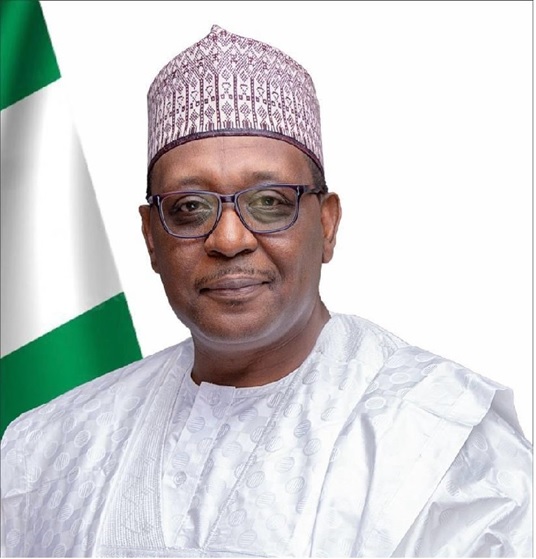
Nigerian Health Minister, Muhammed Ali Pate

Diabetes is a global public health burden threatening humanity and putting pressure on global health recompose. According to the International Diabetic Federation (IDF), about 589 million adults are diabetic in 2024 worldwide with the number projected to hit 853 million in 2050. Early detection of diabetes is said to be vital in preventing complications such as heart disease, kidney disease, nerve damage, and blurry vision. Ochiaka Ugwu writes on how early and regular screenings are essential in reducing the scourge which can be achieved through strategic sensitization and awareness.
However, Nigeria is one of the 49 countries and territories in the IDF Africa Region. It has the highest number of adults (20-79 years) with diabetes in the Region. An estimated 24.6 million cases reported with the African region in 2024 which is projected to increase to 59.5 million in 2050, about 3.1 million of the reported cases were recorded in Nigeria which was projected to reach 6.6 million in 2050 (IDF diabetes atlas Data).
For Chidinma Ignatius whose both parents died of diabetes, he would rather live in anticipation than go for the diabetes test for fear of the unknown.
Chidinma, a businessman would rather remain unchecked than going for screening which he said may be positive having the disease history in the family.
According to him, “My mother died in 2016 of diabetes which led to multiple organ failures and my father followed in 2022 bowing to the same diabetes. It is better for me to remain uninformed of my status than undergoing the screening and be told that I am diabetic”.
To him, being diagnosed of diabetes is a like a death sentence seeing what his parents passed through before succumbing to the disease.
“One being diagnosed with diabetes is like the end of the world having seen what my both parents suffered. The medications were one thing and the pains they went through were the worst of it. It was better imagined than told.
“Immediately you become aware of your diabetic situation, you will begin to die slowly and painfully. You can never be coordinated again and your life will turn for the worst. It is better to imagine it than knowing that you are diabetic and this is the reason most people will never go for the screening”.
Simon Onoja, a carpenter would rather keep to himself than going for screening for diabetes. He believed that the screening was a fraud which will always confirm you as diabetic for the pharmaceutical industries to profit from.
He said that he hardly sees any one that went for the screening and come out free of the disease, informing that they must detect something that will make you to live on drugs all your life.
“Look at me and see how healthy I look, but if mistakenly go for this their diabetes screening, they will tell me that I have it. It is just to profit from me, because it would be followed with constant medical consultations which attract money, drug prescription and treatment which are very exorbitant and beyond the reach of ordinary man like me.
“They will even make you to believe that is not curable meaning that you will live on drugs all your life. Don’t forget that a patient cured is a patient lost for the pharmaceutical industries. This best explains why they declare bogus profit anytime they are doing progress assessment.
“If they cure you of your ailment, how will they now make this bogus profit?” he asked rhetorically.
However, Mrs. Chinyere Nkwo, a retiree, widow and who has been living with diabetes for 40 years while dismissing both Ignatius and Onojo’s assertions as result of ignorance lamented low diabetes education and awareness especially in the rural areas saying that it had led to low turnout for diabetes screening in Nigeria.
Nkwo who is a member of Diabetes Association of Nigeria (DAN), an affiliate of International Diabetes Association (IDF) complained of high cost of treatment saying she had to cough out between N70, 000 ($50) to N80, 000 ($55) monthly on drugs such as insulin and other drugs like Glucophage, Natrilix used in managing the disease.
She however, called for greater government intervention in way of subsidizing both the drugs and treatment for diabetes with more awareness on screening for early detection to encourage effective management of the disease.
Continuing, she agonized over the dearth of medical personnel handling diabetes cases due to brain drain that has led many of them to travel abroad for greener pasture.
“Most of the medical personnel that attend to us had gone abroad. We keep on seeing new faces who most times may not be familiar with most of us given the fact that we have acclimatized with their activities. It is not always easy adjusting to new ones”.
She advocated for wholistic approach towards creating awareness through sustained advocacy, health education and strategic sensitization to encourage Nigerians to embrace diabetes screening which she said will automatically reduce morbidity.
Speaking at National Conference on Sugar–Sweetened Beverages (SSB) Tax in Abuja in October last year, Nigerian Health Minister, Muhammed Ali Pate lamented that the cost of treating diabetes had continued to increase from an average of N60,000 per person in 2011 to N800,000 in 2021 and it is projected to exceed N1,000,000 by 2030.
Diabetes facts and figures released by IDF revealed the growing global diabetes cases for individuals, families and countries. IDF reports in its Diabetes Atlas (2025) that 11.1% – or 1 in 9 – of the adult population (20-79 years) is living with diabetes, with over 4 in 10 unaware that they have the condition which is very likely in Nigeria due to unwillingness by most people to subject themselves for screening.
However, experts have said that is possible to reduce the impact of diabetes by taking preventive measures for type 2 diabetes and providing early diagnosis and proper care for all types of diabetes. They assured the measures can help people living with the condition avoid or delay complications.
An Abuja based lab Scientist, Gertrude Uchenna while noting the low turnout for diabetes screening in her lab even when the cost is N1000 which is less than one dollar speaks volume of non-interest in diabetes checks.
Uchenna upon recognizing government’s effort in creating awareness through sensitizations and campaigns of various type says that a lot need to be done for people to be conscientized on the dangers of diabetes when not detected early and treated as well.
“Government is creating awareness on diabetes, but more were needed. We need more than diabetes policy, but diabetes in every policy to sink down to the consciousness of the people irrespective of their background. The campaign should be a continued one and impacting with the aim of targeting the people at the grassroots” she said.
Although, no awareness survey has been conducted, but most health experts stated that awareness of diabetes as a health priority and knowledge of diabetes prevention is poor, especially among rural people with little education and exposure.
“Don’t be surprised that most people in our rural communities have not heard of diabetes much more of thinking of screening and prevention” a health worker, Gladys Utoko said.
Again, Utoko stressed the need for community collaboration and empowerment through sensitization and awareness campaign.
“Government can educate the people on the important of screening and early detection through the stakeholders like traditional and religious leaders to water the advocacy down in their own language.
“They can also embark on community empowerment to enable them construct a social center for physical exercise. Community involvement can strengthen government efforts in creating the much-needed awareness on diabetes screening and prevention” she stressed.
Although, Nigeria has taken drastic steps towards diabetes prevention and control by creating necessary awareness, sensitization, and enlightenment. On March this year, Minister Pate also announced government plans of procuring N2 billon diagnostic kits for blood glucose monitoring system and N4.5 billion to procure antibiotics, anti-hypertensive and anti-diabetic medications, beyond the test kits, which would be distributed to help lower costs.
Sometimes, these interventions are not fully implemented, partly because of insufficient funding or lack of cash backup. This called for stakeholders’ intervention especially donor agencies, NGOs, Organized Private Sector of the economy collaboration with government to enhance the inadequate institutional capacity for strengthening public health activities. Stakeholders can build capacity of communities and the government is encouraged to match it to achieve a widespread screening culture that we desire to curtail diabetes.
Quote
“Government is creating awareness on diabetes, but more were needed. We need more than diabetes policy, but diabetes in every policy to sink down to the consciousness of the people irrespective of their background. The campaign should be a continued one and impacting with the aim of targeting the people at the grassroots” she said.


 Event planning is my passion – Amaka John, Amitouch MD
Amaka John is the Managing Director.
 Apostle Chibuzor Chinyere of OPM Touches the Lives of Indigent Nigerians Through His Charity Works
OPM runs 29 free schools, two.
 When Sinoma promoted cross-cultural integration between China and Nigeria
The fact remains that China’s use.
 Xi Jinping’s reelection: A reflection of peoples’ wish
On Friday March 10, China’s parliament.
 When Zarma/Zabarmawa people gathered to advance common course
The people of Zarma/Zabarmawa are believed.
 In the Nation’s Capital, How Medical Health Facilities are complying with the Nigerian abortion law
It was shortly before noon on.
 Towards implementing National Action Plan on Youth, Peace and Security
After the adoption of UNSCR 2250.
As part of countdown to successful.
Leave a Comment