

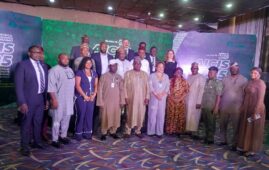
The Senior Special Assistant to the President on Public Health and Focal Person for Nutrition, Office of the Vice President, Mrs. Uju Rochas-Anwukah has said that effective and coordinated support system would greatly see to the rise of breastfeeding rate and reduced malnutrition in children.
Mrs. Rochas-Anwukah who made this known at the 2025 world breastfeeding week commemoration ceremony held in National Hospital, Abuja Wednesday emphasized the need for workplaces to create safe spaces for breastfeeding, healthcare facilities training providers to guide and encourage mothers, communities to break harmful myths and encourage exclusive breastfeeding, with policymakers ensuring that laws protect maternity rights and access to nutritious food.
According her, “The reality is that if we want to see breastfeeding rates rise and child malnutrition decline, our support systems must work together. This means: Workplaces creating safe spaces for breastfeeding and expressing milk; Healthcare facilities training providers to guide and encourage mothers; Communities breaking harmful myths and encouraging exclusive breastfeeding; Policymakers ensuring that laws protect maternity rights and access to nutritious food’ she said.
She remarked that breastfeeding was one of the most cost-effective public health interventions which costs nothing, but prevent illnesses, strengthen immunity, improve brain development, and reduce the risk of malnutrition.
“Breastmilk is nature’s perfect food: clean, readily available, and packed with all the nutrients and protection a baby needs to survive and thrive. “Breastfeeding is one of the most cost-effective public health interventions we have. It costs nothing, yet it can prevent illnesses, strengthen immunity, improve brain development, and reduce the risk of malnutrition.
“But we know that willingness alone is not enough. A mother can only breastfeed optimally if she has the support she needs. That is why today’s theme — “Prioritize Breastfeeding: Create Sustainable Support System” — is so relevant. This is why I must comment the organizers of this event.
“Here in Nigeria, we are making progress. It is encouraging to see that most states have now implemented six months of paid maternity leave and two weeks of paternity leave.
“This is a big step forward because it acknowledges that both mothers and fathers have a role in a child’s earliest days.
“Our legislators are also playing their part. The House Committees on Food and Nutrition are working on measures to support breastfeeding and nutrition across the country.
“This kind of whole-of-government, whole-of-society approach is exactly what we need if we are to truly tackle malnutrition” she noted.
Also speaking, The Coordinating Minister of Health and Social Welfare, Prof. Muhammad Ali Pate, who hailed stakeholders scaling up breastfeeding practice and maternal-child health initiatives across the country stated the importance of exclusive breastfeeding for the first six months of birth, which would be continued till two years and beyond, maintained that it enhances child survival, cognitive development, and long-term national productivity.
Pate represented by the Director and Head of Nutrition Department at the Federal Ministry of Health and Social Welfare, Ladidi Kuluwa Bako-Aiyegbusi mni said that breastfeeding benefits not just babies, but also mothers, families, communities, and the nation.
“It is a cost-effective, natural intervention that reduces malnutrition, improves brain development, and lowers disease burden,” he said.
He also called for urgent community action towards establishing conducive environments that empower mothers to breastfeed successfully.
Minister Pate informed of Nigeria’s progress but stated the challenges, saying that the nation’s exclusive breastfeeding rate stands at 29%, which was far below the global average and the WHO target of 50%.
UNICEF representative, Submit Karen, emphasized the need for coordinated efforts to scale up breastfeeding practices in Nigeria.
He identified breastfeeding as a public health priority essential for reducing child mortality, enhancing maternal health, and boosting national development.


more recommended stories
 3000 delegates from 126 countries to attend 2026 Abuja WPRF event – NIPR President
About 3000 delegates from 126 nations.
-
FG, experts unite to tackle malnutrition with new National Plan
Nigeria has drawn a bold line.
-
Tuggar makes case for Africa’s authentic owned, culturally grounded democracy
Nigerian Foreign Minister has stressed the.
-
National security remains Tinubu’s top priority – FG
Nigerian government has reiterated its commitment.
-
AKH-TRACADA commends Cross River Govt for creating Anti-Drug Club in schools
Anti – kidnapping, Human Trafficking, Child.
-
China, Africa intelligentsia share thoughts on harnessing GGI potentials
Chinese and African intelligentsia have shared.
-
Establishment of 15 Chinese Corners highlights China, Nigeria relations – Education Secretary
FCT Mandate Secretary for Education, Dr..
-
Chinese Mandarin officially added to Nigerian school curriculum
Nigerian government has formally added the.
-
Climate Change: Tinubu calls for resilient, green inclusive industrial future
Nigerian President, Bola Ahmed Tinubu has.
-
AKH-TRACADA commiserates with Republic of Ghana over death of two ministers, other top officials
The Anti – kidnapping, Human Trafficking,.




Leave a Comment