

While global foreign direct investment (FDI) collapsed significantly in 2020, China’s inbound FDI grew against the trend by 4 percent to $163 billion, indicating that the country surpassed the U.S. as the largest recipient of FDI in the world, according to the latest Investment Trends Monitor of the United Nations Conference on Trade and Development (UNCTAD).
Data from China’s Ministry of Commerce (MOC) showed that the country’s total volume, yearly increment, and global share of inbound FDI all climbed last year.
In particular, the country’s actually used FDI totaled 999.98 billion yuan (about $152.9 billion) in 2020, up 6.2 percent from the previous year, while the paid-in FDI in China’s non-financial sector grew by 4.5 percent year on year, ranking first in the world, according to the MOC, which also revealed that a total of 39,000 foreign-invested enterprises newly registered in China in 2020.
The continued growth in the amount of paid-in foreign investment in China against the trend of shrinking FDI worldwide has been accompanied by the country’s constant efforts to open its door wider to the rest of the world.
“When economic globalization has been hindered by headwinds and protectionism and unilateralism are on the rise, China’s notable growth in actual use of foreign investment has proven the huge attractiveness and growth potential of the Chinese market,” said Cui Fan, a professor of the School of International Trade and Economics, University of International Business and Economics.
Such achievement is the result of the country’s effective response to the COVID-19 pandemic and earnest implementation of relevant policies and measures, which sped up the restorative growth of the Chinese economy and made the country the world’s only major economy that achieved positive growth amid the raging COVID-19 last year, Cui said.
Factors such as lower market access threshold for foreign investment and continuously improving business environment are closely related to China’s achievements in attracting foreign investment and have signaled the country’s resolve to unswervingly expand its opening-up during the new development stage.
The super-large Chinese market is becoming more and more attractive to foreign investors as Chinese residents’ income rises steadily, the country’s middle-income group has constantly expanded, and the trend of consumption upgrading has continued to gain momentum.
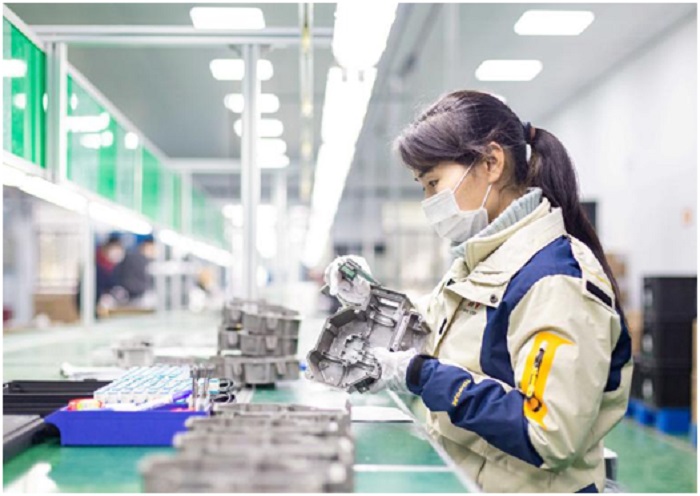
“China has given play to its advantage as the world’s factory and exerted strong manufacturing capabilities amid the COVID-19,” Cui said.
“The Eurostat pointed out that among the top ten largest trading partners of the European Union (EU), the EU saw positive growth in two-way trade only with China last year, which proves that China’s strong economic recovery has laid a solid foundation for its trade growth with the EU and that the resilience and vitality of China’s manufacturing sector should not be underestimated,” Cui said.
“China has become the biggest trading partner of the majority of countries and regions in the world. This is already a fact,” Cui said, adding that the fact shows the great appeal of the Chinese market and that in the international trade arena, China can be called the center of manufacturing in the world and the hub of global value chain.
China, also the world’s largest exporter, has complete industrial chain systems and is one of the few economies in the world with a complete range of industries, according to Cui, who believes that with the continued growth in the size of China’s economy and the implementation of measures such as the ones for expanding imports, China is going to show more and more advantages in manufacturing and foreign trade, and the Chinese market will be opened wider and wider to the world.
China is facing considerable challenges in stabilizing foreign investment this year. On the one hand, multinational corporations may find themselves unable to make investments as their wealth shrank significantly due to the COVID-19. The UNCTAD estimated that global FDI fell by 42 percent in 2020.
On the other hand, global industrial and supply chains are being restructured after the outbreak of the COVID-19, which poses new challenges to China’s efforts to utilize foreign investment.
The MOC will further improve China’s business environment, earnestly implement the Foreign Investment Law and regulations for the implementation of the law, as well as the working mechanisms for handling complaints filed by foreign-invested enterprises, and strengthen protection for the legitimate rights and interests of foreign investors, said Wang Wentao, China’s Minister of Commerce.
The MOC will continue to create a market-oriented, law-based, and internationalized business environment and ensure that foreign investors enjoy better environment, better development, and greater accomplishments in China, Wang added.
more recommended stories
2027: Elumelu Campaign Group sets to meet party executives, leadersIn a bid to strategize for.
AKH-TRACADA congratulates Marwa on reappointment as NDLEA ChairThe Executive and members of the.
Road Safety is a collective responsibility, says FCT DRTS Ag DirectorThe Acting Director, FCT Directorate of.
Igbo group calls on Tinubu to release IPoB leader, KanuPresident Bola Ahmed Tinubu has been.
Ministerial slot: Tinubu appoints Nnaji’s replacementBarely a month after resignation of.
Lawyer cautions Kanu against dragging Buratai into his trialAn Abuja based Legal Practitioner, Osuagwu.
Odey commends Tinubu for appointing Amupitan INEC chairConvener of Equitable Remedy, Mrs. Magaret.
FCT waste disposal contractors notify of planned suspension of services over nine months debtContractors handling the contract for city.
FG begins evacuation of stranded Nigerians in Central African RepublicNigerian government may have concluded plans.
DICAN hosts int’l conference, harps on global peace, security, dev’tThe Diplomatic Correspondents Association of Nigeria.


Leave a Comment